
What is automated farming and how will it change the future of agriculture?
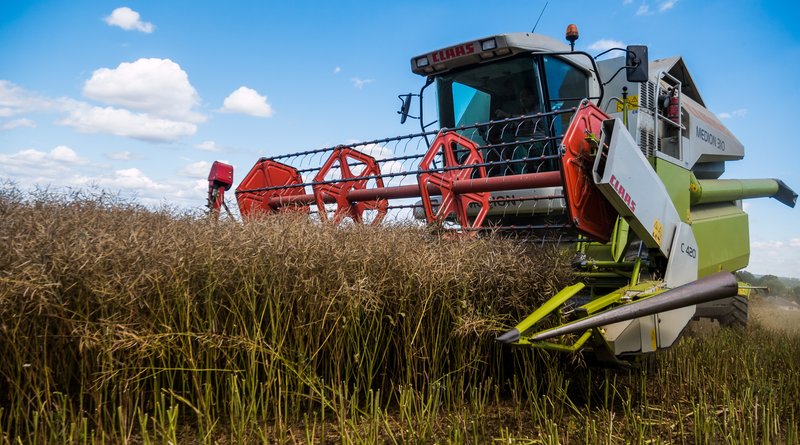
Automated farming is the use of technology — robotics, GPS-guided machinery, sensors, artificial intelligence, and data systems — to carry out agricultural tasks with minimal or reduced human input. It ranges from auto-steer tractors that follow centimetre-accurate GPS lines to fully autonomous robots that can plant, spray, and harvest without an operator in the cab. For anyone buying, selling, or managing agricultural equipment today, automated farming is not a distant concept — it is already reshaping which machines hold value, which become obsolete, and what buyers expect when they come to market.
What does automated farming actually include?
Automated farming covers a wide spectrum of technologies, not a single product or system.
At the entry level, it includes precision agriculture tools already common on modern farms:
- Auto-steer and GPS guidance — tractors and sprayers that follow pre-programmed field paths with sub-inch accuracy, reducing operator fatigue and input waste
- Variable rate technology (VRT) — systems that automatically adjust seeding rates, fertilizer, or chemical application based on soil maps and yield data
- Telematics and fleet monitoring — sensors that track machine hours, fuel consumption, fault codes, and location in real time
- Drone-based scouting and spraying — UAVs used to identify crop stress, pest pressure, or moisture variation across large fields
At the advanced end, full automation includes:
- Autonomous tractors — machines like the John Deere 8R autonomous tractor that can till, plant, and spray without anyone in the cab
- Harvesting robots — specialized robots for fruit, vegetable, and specialty crop picking that use computer vision to identify and harvest ripe produce
- Autonomous grain carts and transfer vehicles — equipment that follows combine harvesters automatically, reducing the need for a second operator
- AI-driven decision platforms — software that analyses satellite imagery, weather data, soil sensors, and yield history to recommend or automatically execute field decisions
Why is automated farming growing so fast?
Three converging pressures are driving adoption faster than most industry observers predicted.
Labour shortages are acute. Farm labour is increasingly difficult to source in North America, Europe, and Australia. Seasonal workers are harder to recruit, and wages have risen significantly. Automation fills gaps that cannot be solved by simply paying more.
Input costs demand precision. Fertilizer, fuel, chemicals, and seed are expensive. Automated systems apply inputs at exactly the right rate in exactly the right place, cutting waste and protecting margins on thin-margin crops.
Data has become infrastructure. Modern farm management relies on data that no human can process manually at scale. AI systems can synthesize satellite imagery, soil probes, weather forecasts, and historical yield data to make better agronomic decisions than generalized human judgement alone.
How will automated farming change the equipment market?
For equipment buyers and sellers, this shift has direct commercial consequences — not just agronomic ones.
Will automated equipment hold its value better?
Generally yes, but with important caveats. Machines equipped with current precision agriculture technology — factory-fitted auto-steer, telematics, compatibility with modern data platforms — command stronger resale prices because buyers want connectivity and upgrade potential. However, equipment that is technically complex but no longer supported by manufacturer software updates can depreciate sharply. Buyers should verify whether a machine’s precision agriculture system is still receiving firmware and mapping support before bidding.
What happens to older conventional equipment?
Conventional equipment without precision agriculture features is not worthless — far from it. Smaller operations, farms in developing markets, and contractors who need straightforward workhorse machines continue to buy conventional tractors, tillage equipment, and harvesting gear in strong numbers. The auction market reflects this: well-maintained conventional agricultural equipment continues to sell competitively, particularly where simplicity and repairability matter more than technology integration.
If you are looking to sell conventional agricultural equipment or upgrade to precision-capable machines, upcoming heavy equipment auctions from Ritchie Bros. in Manitoba, Saskatchewan, and the US regularly feature a broad range of farm equipment across both categories.
Does automation affect which tractor sizes sell?
Yes. Autonomous systems favour larger, higher-horsepower tractors where the cost of the technology is more easily justified per acre. At the same time, lightweight autonomous platforms designed for specialty crops and market gardens are growing — smaller, nimble robots designed for row crops, orchards, and vineyards that could not economically use large conventional equipment. This is creating demand at both ends of the size spectrum and putting some pressure on the mid-tier conventional tractor segment.
What should equipment buyers watch for right now?

If you are buying agricultural equipment in the next one to three years, these factors matter more than they did five years ago.
Check technology compatibility. Before bidding on a tractor with a precision agriculture package, confirm what guidance system it runs, whether it is still supported, and what subscription costs apply. Some systems require ongoing licensing fees that affect total cost of ownership.
Assess telematics history. Many modern machines generate detailed operational data. Ask whether telematics records are available — they can reveal how hard a machine was worked, whether fault codes were addressed, and actual hours versus stated hours.
Consider implement compatibility. Automated systems on tractors often need compatible implements to work properly. An auto-steer tractor paired with an incompatible seeder defeats much of the purpose. Buyers upgrading to precision-equipped machines should audit their full implement fleet, not just the prime mover.
Factor in connectivity infrastructure. Autonomous and precision farming systems require reliable GPS signal, and some require cellular connectivity. In remote areas, connectivity limitations can reduce the practical value of advanced features.
How will automated farming change what gets sold at auction?
The auction market for agricultural equipment is already showing early signals of the automation shift:
- Higher demand for late-model, technology-equipped tractors from buyers who want precision agriculture capability without new-machine prices
- Strong interest in drone and sensing equipment as spray drones and scouting UAVs increasingly appear in auction catalogues
- Growing trade in telematics-connected combines and sprayers where buyers can review operational data prior to bidding
- Emerging categories such as autonomous navigation retrofit kits, precision irrigation systems, and variable rate controllers appearing in industrial and farm equipment auctions
For buyers and sellers active in agricultural markets across North America, keeping an eye on frequent farm auctions from Ritchie Bros. is worthwhile — these events frequently include a mix of precision-equipped and conventional farm equipment from working operations across the Prairies.
What does the future of automated farming look like?
Within the next decade, the industry broadly expects:
- Fully autonomous field operations to become commercially viable for row crop farms of scale, with multiple autonomous machines running simultaneously managed by a single operator monitoring from an office or device
- Robot-as-a-service models where farms access autonomous equipment through service contracts rather than outright purchase — a model that will affect how much equipment enters the secondary market
- Deeper AI integration connecting field sensors, weather data, commodity prices, and agronomic models to make real-time decisions about planting, nutrition, and harvest timing
- Regenerative agriculture compatibility — automation enabling precision practices that improve soil health, reduce chemical inputs, and support sustainability certification requirements that increasingly affect market access
None of this eliminates the need for robust, well-maintained equipment. Automation changes what machines do — it does not remove the need to buy, maintain, and eventually sell them.
The bottom line for buyers and sellers
Automated farming is not a future concept. It is a present-tense shift that is already influencing equipment values, buyer expectations, and what sells at auction. The buyers and sellers who understand this transition — and who know how to evaluate precision agriculture features, telematics data, and technology compatibility — will make better decisions than those who treat every tractor as equivalent to its horsepower rating alone.
Whether you are acquiring equipment that will work alongside automation systems, or selling machines from a fleet being upgraded, the fundamentals remain: condition, maintenance history, and fit for purpose. Automation adds a new layer of assessment on top of those — it does not replace them.


 |
Cummins vs Detroit vs PACCAR: Which lasts the longest? |


Ritchie Bros. is a one-stop-shop for everything your equipment and truck business needs to succeed - buying and selling solutions, market insights and valuation, global buyer demand, and fleet management tools.
Ritchie Bros., Two Westbrook Corporate Center, Suite #1000 Westchester, Illinois, 60154 | +1.800.663.8457