
Ford F-150, Ram 1500 and Silverado 1500: Half-ton truck showdown & comparison
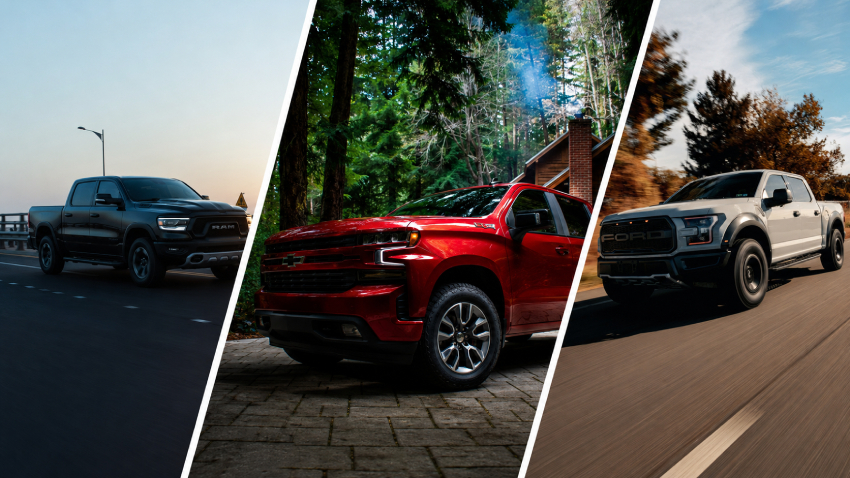
The Ford F-150, Ram 1500, and Chevrolet Silverado 1500 have traded the top-selling truck spot in North America for decades — and for good reason. Each one is a capable, well-engineered half-ton with a loyal following. But when you’re buying a pickup truck for work, a fleet, or a farm, the right choice comes down to how you’ll actually use it: towing heavy loads, hauling material, commuting between job sites, or all three. Here’s a direct, no-fluff comparison of all three so you can make the call.
Towing capacity: which pulls the most?
The Ford F-150 leads on maximum tow rating, but all three are competitive enough that configuration matters more than the nameplate.
| Truck | Max Tow Rating (properly equipped) |
|---|---|
| Ford F-150 | Up to 14,000 lbs |
| Ram 1500 | Up to 12,750 lbs |
| Chevrolet Silverado 1500 | Up to 13,300 lbs |
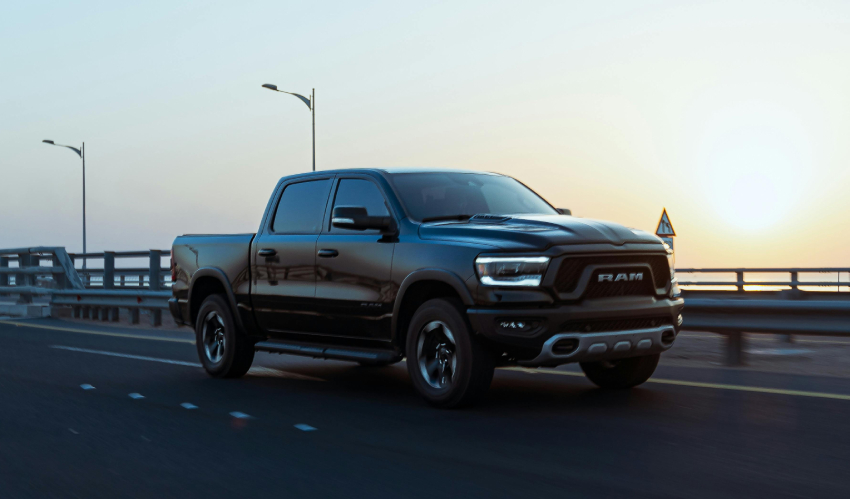
The F-150’s top number comes with the 3.5L EcoBoost V6 and Max Trailer Tow Package — a configuration that adds trailer brake controller, upgraded cooling, and a higher GVWR axle. The Silverado 1500 with its 6.2L V8 and Duramax 3.0L diesel also delivers strong real-world tow numbers. The Ram 1500 trails slightly on peak capacity but is frequently praised for its smoothest towing experience thanks to its coil-spring rear suspension, which absorbs sway and load shifts better than the leaf springs on the F-150 and Silverado.
Bottom line: If raw maximum capacity is your priority, spec an F-150 with the 3.5L EcoBoost. If ride quality while towing matters as much as the number, the Ram 1500 earns its reputation.
Payload Capacity
The F-150 again leads on maximum payload, with the right trim capable of carrying over 2,200 lbs in the bed.
| Truck | Max Payload Capacity |
|---|---|
| Ford F-150 | Up to 2,238 lbs |
| Ram 1500 | Up to 2,300 lbs |
| Chevrolet Silverado 1500 | Up to 2,250 lbs |
Note: Payload ratings vary significantly by cab style, bed length, engine, and option packages. Always check the yellow payload sticker inside the door jamb of the specific truck — not just the class maximum.
For contractors who need to carry gravel, tools, or pipe fittings between sites, payload is just as important as tow rating. If you’re running skid steer fork frames or similar attachments in the bed or on a trailer, confirm your gross combination weight rating (GCWR) — not just individual tow or payload limits.
Engine Lineup: Gas, diesel, or hybrid?
Each truck offers a diesel and hybrid option alongside traditional V6 and V8 gasoline engines — the right choice depends on your annual mileage and typical load.
Ford F-150 engine options
- 2.7L EcoBoost V6 — Best all-around value, strong mid-range torque
- 3.5L EcoBoost V6 — Maximum tow/payload, top performance pick
- 5.0L V8 — Traditional power delivery, simpler to service
- 3.5L PowerBoost Hybrid — Best fuel economy, adds onboard generator (Pro Power Onboard)
- 3.0L Power Stroke Diesel — Best for high-mileage highway fleets
Ram 1500 engine options
- 3.6L Pentastar V6 — Entry level, adequate for light work
- 5.7L HEMI V8 — The most popular choice; strong torque, widely serviced
- 3.0L EcoDiesel V6 — Best fuel economy in the lineup
- eTorque mild-hybrid system available on V6 and V8
Chevrolet Silverado 1500 engine options
- 2.7L Turbocharged 4-cylinder — Fuel efficient, adequate payload
- 5.3L V8 — Best-value V8 in the segment; reliable long-term
- 6.2L V8 — Highest output, pairs well with 10-speed transmission
- 3.0L Duramax Diesel — Competitive fuel economy, strong torque curve
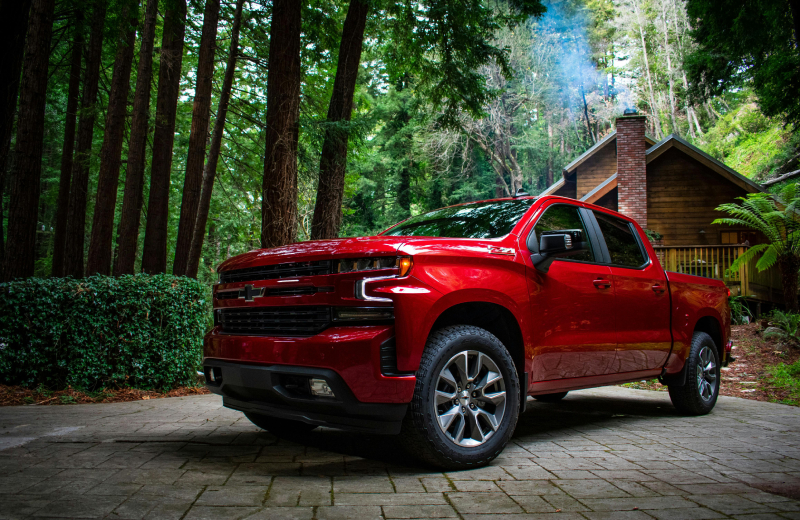
If fuel cost is a major operating expense, the diesel options on all three trucks deliver 5–8 more highway mpg than their V8 equivalents. If you’re buying used and resale simplicity matters, the 5.0L F-150 and 5.3L Silverado have deep parts availability and a large service network.
Ride quality and daily driving
The Ram 1500 wins this category outright — its rear coil-spring suspension is a genuine differentiator.
The F-150 and Silverado both use traditional leaf-spring rear setups, which are durable and load-bearing but produce a stiffer, choppier ride when the truck is unladen. The Ram’s coil-spring system absorbs road imperfections more effectively, making it the preferred choice for drivers who cover long daily distances between job sites or spend significant time on rough secondary roads. Air suspension is also available on higher Ram trims for further adjustability.
For fleet managers buying trucks that double as crew transport and workhorses, ride quality on empty miles is a real operational consideration — not just a comfort preference.
Cab & bed configurations
All three trucks offer similar configuration flexibility:
- Cab styles: Regular (2-door), SuperCab/Quad Cab/Extended Cab (small rear doors), and CrewCab/Mega Cab (full 4-door)
- Bed lengths: Short (5.5–5.8 ft), Standard (6.5 ft), Long (8 ft)
The Ram 1500 Mega Cab offers the largest rear passenger compartment in the segment — useful for crew hauling. The F-150’s aluminum bed is lighter than the steel beds on the Ram and Silverado, contributing to its higher payload numbers. The Silverado’s Multipro tailgate (available on higher trims) is one of the more practical bed-access innovations in the segment.
Reliability & long-term ownership costs
All three are reliable trucks in the half-ton class, but long-term ownership data points to some meaningful differences.
- The F-150’s aluminum body (introduced on the 2015 generation) raised initial repair cost concerns, but the material has proven durable. Body repairs do require aluminum-specific equipment, which affects collision repair costs.
- The Ram 1500’s 8-speed ZF transmission had documented issues in early production years (2014–2016). Post-2019 models are significantly more refined.
- The Silverado’s 5.3L V8 is widely regarded as one of the most dependable engines in the segment with low maintenance frequency over high mileage — a strong consideration for fleet operators who prioritize uptime.
For buyers purchasing used, a pre-purchase inspection matters regardless of make. Check service records, transmission history, and whether the truck was previously used as a tow vehicle — cumulative hitch stress affects frame, transmission, and cooling systems.
Resale value
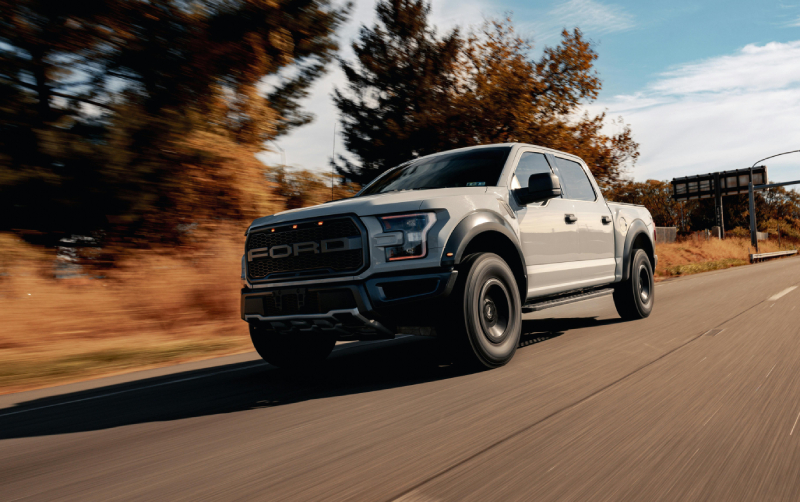
The Ford F-150 consistently holds the strongest resale value of the three, though the gap has narrowed in recent years.
F-150s — particularly well-spec’d XLT and Lariat trims with the EcoBoost engines — command strong prices in the used market. Ram 1500s have improved their residuals significantly since the 2019 redesign. Silverados trail slightly on resale but often represent better value for buyers purchasing used, since initial depreciation is faster.
For fleet managers and business owners who buy trucks to eventually sell them, resale strength is a real return-on-asset consideration. Used half-ton trucks in good working condition move quickly at auction — buyers looking for work-ready pickups can find all three makes regularly available.
Quick verdict by use case
| Use Case | Best Pick |
|---|---|
| Maximum towing capacity | Ford F-150 (3.5L EcoBoost) |
| Best ride quality for long-distance driving | Ram 1500 |
| Most dependable V8 for fleet use | Chevrolet Silverado 1500 (5.3L) |
| Best onboard power / generator capability | Ford F-150 (PowerBoost Hybrid) |
| Best diesel fuel economy | Ram 1500 EcoDiesel |
| Best resale value (long-term) | Ford F-150 |
| Best value when buying used | Chevrolet Silverado 1500 |
| Best for crew transport + payload | Ram 1500 Mega Cab |
Buying a a used half ton pickup at Ritchie Bros.
If you’re equipping a fleet or replacing a work truck, buying used through auction is one of the most cost-efficient routes available. All three trucks — F-150, Ram 1500, and Silverado 1500 — appear regularly in Ritchie Bros. auctions in a wide range of years, specs, and configurations.
When evaluating a used truck for purchase, prioritize:
– Confirmed tow/payload ratings for the specific VIN
– Transmission service history
– Evidence of frame, hitch, or suspension wear from heavy towing
– Whether attachments or livestock handling equipment like a cattle loading ramp will be used — these affect GCWR calculations in agricultural applications
A well-maintained used half-ton at the right price will outperform a brand-new truck that’s over-spec’d for the job. Know your actual workload, match the truck to it, and buy accordingly.


 |
Floor Cleaning Machines: A practical buyer’s guide to types, specs & value |


Ritchie Bros. is a one-stop-shop for everything your equipment and truck business needs to succeed - buying and selling solutions, market insights and valuation, global buyer demand, and fleet management tools.
Ritchie Bros., Two Westbrook Corporate Center, Suite #1000 Westchester, Illinois, 60154 | +1.800.663.8457