
Cummins vs Detroit vs PACCAR: Which lasts the longest?
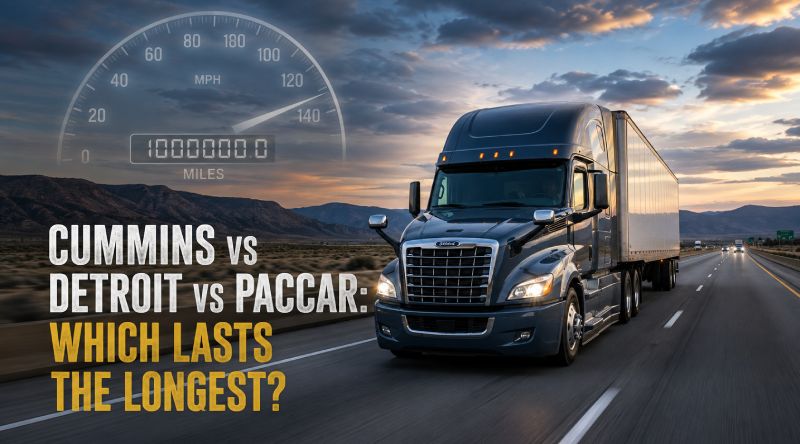
When you’re buying a used semi truck — at auction or anywhere else — the engine under the hood is the single biggest variable in what you’re getting. The frame, the cab, the sleeper: those are all fixable. The engine determines whether you get 500,000 miles of reliable work or a money pit from day one. So if you’re weighing up Cummins vs Detroit Diesel, or trying to decide whether a PACCAR-powered Kenworth or Peterbilt is worth the premium, this breakdown gives you the real picture — not manufacturer marketing.
The three engine families that dominate the used semi truck market
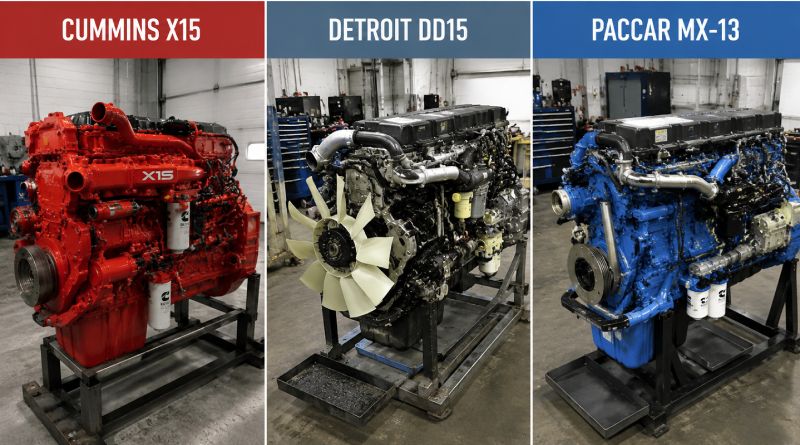
The vast majority of used Class 8 trucks you’ll encounter at auction run one of three engines: a Cummins, a Detroit Diesel, or a PACCAR MX. Each has a different ownership profile, a different maintenance history norm, and a different resale trajectory. Understanding the differences shapes every buying decision.
Cummins: still the benchmark for longevity?
Cummins is the most widely deployed diesel engine in the North American trucking market, and for most buyers it remains the default choice for long service life.
The ISX and X15 series are the engines you’ll encounter most often in used truck inventory. The ISX15, in particular, has a reputation for reaching 1,000,000+ miles with disciplined maintenance — oil changes on schedule, coolant system attention, and EGR/DPF upkeep that many owner-operators have learned to manage themselves.
What makes Cummins reliable over the long haul?
Cummins reliability comes from parts availability, technician familiarity, and a proven block design that has been refined over decades. Almost every independent diesel shop in North America can work on a Cummins. That matters enormously when you’re deciding whether a high-mileage engine is worth buying: the cheaper and easier it is to source parts and labour, the more runway that engine still has.
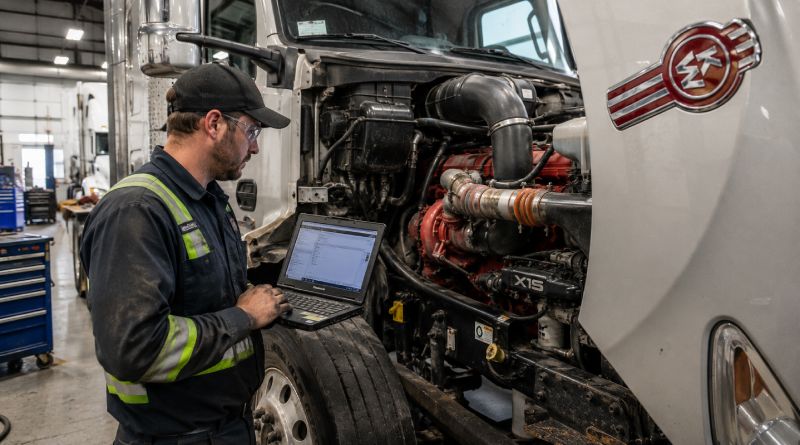
Common Cummins concerns to inspect before buying: – EGR cooler failure (ISX generation) — expensive if neglected – Injector cup wear on higher-mileage engines – DPF issues if the truck ran a lot of short-haul/idle-heavy work – Overhead valve adjustment history
A Cummins with documented service history and under 700,000 miles is generally a low-risk buy. Above 900,000 miles, price accordingly and budget for top-end work.
Detroit Diesel: the DD15 changes the conversation
Detroit Diesel’s DD15 is the strongest argument that Cummins no longer has an uncontested claim on the title of most reliable diesel engine.
For years, Detroit’s reputation in used truck markets was complicated. The Series 60 was genuinely excellent — rugged, tuneable, and well-understood. Then the transition to emissions-compliant engines introduced reliability headaches that burned some buyers. The DD13 had its share of early problems. But the DD15, particularly units built from 2013 onward, has earned a serious reputation for durability.
How does Detroit Diesel compare to Cummins for longevity?
Head-to-head, a well-maintained DD15 is competitive with the ISX15 for long-haul lifespan. Freightliner and Western Star fleets that run DD15s regularly report 800,000–1,000,000 miles before major overhaul. Detroit’s Integrated Detroit Powertrain (IDP) — where the engine, transmission, and rear axle are engineered together — can actually extend drivetrain life when kept as a complete system.
The catch: DD15 parts and specialist knowledge are more concentrated at Freightliner/Detroit dealer networks. If you’re operating in a region with thin dealer coverage, servicing a DD15 gets harder and more expensive.
Common Detroit Diesel concerns to inspect: – EGR system condition on pre-2014 units – Turbocharger wear — Detroit turbos are not cheap to replace – Oil cooler integrity – DEF system function (SCR/aftertreatment)
For buyers purchasing a used Freightliner Cascadia or Western Star, the DD15 is a known quantity that shouldn’t be a deterrent — provided the maintenance records hold up.
PACCAR MX: the overlooked contender
The PACCAR MX-13 is a genuinely competitive engine, but its reliability record is newer and thinner than Cummins or Detroit Diesel, which matters when buying used.
PACCAR — the parent company of Kenworth and Peterbilt — moved from sourcing Cummins engines to manufacturing their own MX series, first introduced in North America around 2010. The MX-13 is a European-origin design (DAF, also owned by PACCAR) adapted for North American duty cycles and emissions standards.
Is the PACCAR MX engine reliable enough to buy used?
In recent years, PACCAR engine reliability ratings have improved substantially. Fleet operators running MX-13-equipped Kenworths and Peterbilts report lower warranty claim rates than the engine’s early years. Independent data from owner-operator forums and fleet maintenance reports suggest the MX-13 is capable of 750,000+ miles with proper maintenance.
The real issue is parts and service concentration. PACCAR MX engines are serviced primarily through Kenworth and Peterbilt dealerships. Independent shops are catching up, but coverage is uneven. If you’re buying a used Kenworth T680 or Peterbilt 579 with an MX-13, factor dealer proximity into your cost of ownership.
Common PACCAR MX concerns to inspect: – EGR and aftertreatment system condition – Fuel system and high-pressure pump wear – Timing system inspection at higher mileages – Coolant system maintenance history
For buyers who want the Kenworth or Peterbilt platform specifically, the MX engine is not a reason to walk away — but it does mean you’re more tied to the PACCAR dealer network for support.
Side-by-side: how the three engines compare for buyers
| Factor | Cummins ISX/X15 | Detroit DD15 | PACCAR MX-13 |
|---|---|---|---|
| Typical overhaul mileage | 900K–1.2M | 800K–1.0M | 700K–900K |
| Parts availability | Excellent — universal | Good — dealer-heavy | Limited — PACCAR network |
| Independent shop support | Widest in industry | Moderate | Growing, but uneven |
| Resale value | Consistently strong | Strong in Freightliner trucks | Moderate, improving |
| Emissions system complexity | High (ISX era) | High | High |
| Best use case | Any fleet, any region | Freightliner/Western Star ops | Kenworth/Peterbilt buyers |
What actually matters more than the brand
The biggest mistake buyers make is treating engine brand as a binary reliability verdict. A neglected Cummins ISX with 600,000 miles and no service records is a worse buy than a DD15 with 850,000 miles and a complete dealership maintenance history.
The factors that predict remaining engine life:
- Oil change intervals — Were they 15,000-mile intervals or 25,000+? Longer intervals on high-load applications shorten engine life significantly.
- Coolant system maintenance — EGR cooler and oil cooler failures trace back to neglected coolant changes.
- Idle hours vs. road hours — High idle ratios accelerate wear without adding useful miles. Pull the ECM data.
- DPF/aftertreatment history — Forced regenerations, deletions, or repeated DPF failures signal hard use or poor maintenance.
- Compression test and blow-by check — Non-negotiable on any used engine purchase above 500,000 miles.
If you’re buying through a live or online auction, look for units where inspection reports are available. Truck engines and components include listings with condition detail that helps you assess remaining life before bidding.
Which engine should you buy?
Buy the Cummins if: you want maximum flexibility — the widest service network, strongest parts availability, and the most predictable resale value. It’s the lowest-risk choice for buyers who operate across multiple regions or don’t have a preferred dealer relationship.
Buy the Detroit DD15 if: you’re already in the Freightliner or Western Star ecosystem, have good dealer access, and are buying a truck with documented fleet maintenance history. The DD15 is a genuine long-haul engine and shouldn’t be avoided.
Buy the PACCAR MX if: you want the Kenworth or Peterbilt platform and have access to PACCAR dealer support. Don’t let the engine choice alone steer you away from a well-maintained MX-equipped truck — but do your homework on local service availability.
For buyers looking at a wider range of used semi trucks and vocational trucks at auction, the engine type will often follow the OEM: Cummins is common across many makes, DD15 in Freightliner/Western Star, and MX in Kenworth/Peterbilt. Let the inspection data and service history drive the final call — not brand loyalty.
Bottom line
Cummins holds a narrow edge in raw longevity and service ecosystem breadth. Detroit’s DD15 is its closest competitor and genuinely earns its reputation in long-haul fleets. PACCAR’s MX-13 is a solid engine that’s closing the gap, but its dealer-dependent service model adds friction for some buyers.
The engine brand matters. The maintenance history matters more. Prioritize documented service records, pull ECM data where possible, and let actual condition — not badge preference — determine what you pay.


 |
What is automated farming and how will it change the future of agriculture? |

Ritchie Bros. is a one-stop-shop for everything your equipment and truck business needs to succeed - buying and selling solutions, market insights and valuation, global buyer demand, and fleet management tools.
Ritchie Bros., Two Westbrook Corporate Center, Suite #1000 Westchester, Illinois, 60154 | +1.800.663.8457