
Best trucker GPS app in 2026
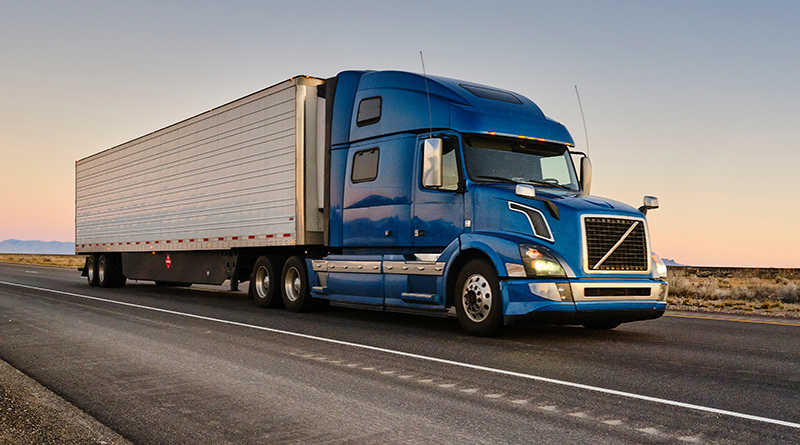
The best trucker GPS app does one thing a standard navigation app cannot: it routes around low bridges, weight-restricted roads, and hazmat-restricted zones before you’re already committed to the wrong lane. For owner-operators and fleet managers buying used trucks, the right app is as important as the rig itself — a routing mistake that damages cargo or gets a truck stuck under a bridge is expensive. This guide cuts through the noise and gives you the top options, what separates them, and what to look for if you’re evaluating a used truck purchase alongside it.
Truck GPS app vs Google Maps?
A truck GPS app uses vehicle-specific parameters — height, weight, axle count, load type — to generate routes that are legally and physically safe for commercial vehicles. Google Maps routes for passenger cars and will happily send a 13’6″ rig under a 12’4″ bridge.
The core features that matter:
– Truck-specific routing based on your vehicle’s height, weight, and cargo type
– Real-time traffic and road closures with rerouting that respects truck restrictions
– Weigh station alerts and bypass notifications (PrePass integration is a plus)
– Fuel stop mapping with diesel pricing comparisons
– Parking locator for compliant HOS rest stops
– Offline maps for dead zones on rural hauls
The best truck GPS apps compared

1. Trucker Path — best free truck GPS app for community data
Trucker Path is the most downloaded free truck GPS app in North America, and for good reason. Its strength is community-sourced data: real drivers report parking availability, fuel prices, and road conditions in near real-time. The Trucker Path GPS app is particularly useful for finding truck parking — one of the most consistent pain points in long-haul operations.
Best for: Owner-operators who want a solid free option with strong community features
Cost: Free (Pro subscription available for ~$10/month)
Weakness: Routing engine is less sophisticated than paid competitors
2. CoPilot Truck — best overall paid trucking GPS app
CoPilot Truck is consistently rated as the best GPS app for trucks by professional drivers who run tight schedules. It offers fully offline routing — critical when you’re hauling through remote corridors with no data signal. You enter your rig’s height, weight, number of axles, and hazmat status, and it builds a compliant route from there. Updates are frequent and the map data is reliable.
Best for: Long-haul drivers who need offline reliability and precise routing
Cost: ~$50/year subscription
Weakness: Interface feels dated compared to consumer apps
3. Sygic Truck GPS Navigation — best for international routes
Sygic is the strongest option if your routes cross borders — particularly useful for Canadian operators or US fleets running into Mexico. The trucking GPS app includes dynamic weight and dimensional routing, speed limit warnings specific to truck classes, and integrated dashcam features on compatible devices.
Best for: Cross-border operators and drivers who want an all-in-one device solution
Cost: Free download, maps purchased separately (~$20–$60 depending on region)
Weakness: Map purchases add up if you need multiple regions
4. Rand McNally Motor Carrier — best for fleet managers
Rand McNally has been publishing commercial trucking routes since before smartphones existed. Their Motor Carrier app brings that legacy into a modern platform, with robust fleet management integration, Hours of Service (HOS) logging compatibility, and IFTA mileage tracking. For fleet managers overseeing multiple trucks, the backend reporting tools are genuinely useful.
Best for: Fleet managers running multiple vehicles who need compliance and mileage data
Cost: Subscription-based, typically bundled with Rand McNally hardware
Weakness: Best features require their dedicated ELD hardware
5. Google Maps + Truck-Specific ELD Integration — best budget workaround
For short-haul and local delivery trucks under certain weight thresholds, pairing Google Maps with a compliant ELD app covers most needs. This isn’t suitable for Class 8 long-haul, but for operators running lighter commercial trucks on established urban routes, it reduces app subscription costs without meaningful sacrifice.
Best for: Light commercial trucks, local delivery, urban routes
Cost: Free
Weakness: No truck-specific routing — unsuitable for oversize, heavy, or hazmat loads
Quick Comparison: Best Truck GPS Apps at a Glance
| App | Best For | Cost | Offline Maps | Parking Data |
|---|---|---|---|---|
| Trucker Path | Free option, community data | Free / ~$10/mo | Limited | ✅ Strong |
| CoPilot Truck | Paid overall best | ~$50/yr | ✅ Full | Basic |
| Sygic Truck | Cross-border routes | Free + map purchase | ✅ Full | Basic |
| Rand McNally | Fleet management | Subscription + hardware | ✅ Full | Basic |
| Google Maps | Light commercial only | Free | Limited | ❌ |
How to choose the right truck driver GPS app for your operation
Does it support your vehicle’s exact dimensions?
Every serious trucking GPS app should let you enter height, weight, length, number of axles, and cargo type. If an app doesn’t ask for these parameters, it is not a truck GPS app — it’s a rebranded consumer app.
Do you need offline functionality?
If you run rural corridors, mountain passes, or remote agricultural routes, offline maps are non-negotiable. CoPilot Truck leads here. Trucker Path’s free tier depends heavily on connectivity.
Is real-time parking data important to you?
For owner-operators managing HOS compliance, Trucker Path’s parking features have genuine operational value. Missing a legal rest window because parking was full has real cost.
Are you managing a fleet or running solo?
Fleet managers should prioritise Rand McNally or an ELD-integrated solution with backend reporting. Solo operators get more value from CoPilot or Trucker Path’s simplicity.
Trucker GPS app and the used truck buying decision
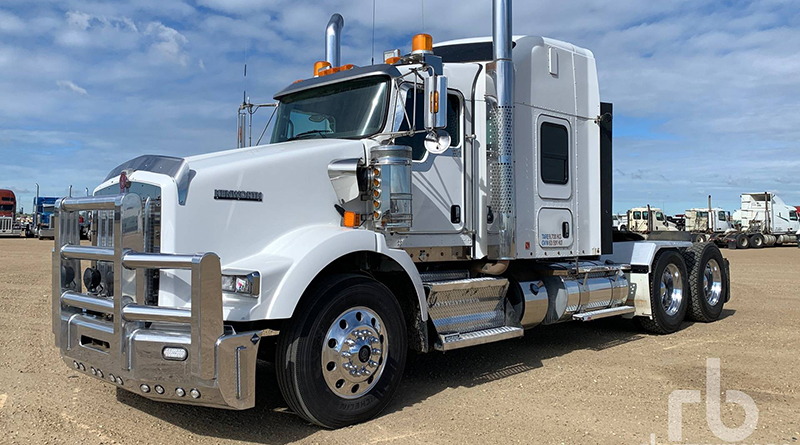
If you’re in the market for a used semi-truck, day cab, or vocational truck, the GPS app you run matters at the spec stage — not just after purchase. A truck spec’d for regional hauls (lower cab height, lighter GVW) will route differently than an OTR rig. Make sure the app you plan to use supports the exact parameters of the truck you’re buying.
When evaluating used trucks at auction, pay attention to whether the vehicle has existing telematics or ELD hardware installed. That hardware may be compatible with your preferred GPS platform — or it may add cost to switch. Grapple trucks and specialty vocational vehicles often come with manufacturer-specific telematics that can integrate with routing software, which is worth confirming before bidding.
For buyers sourcing commercial trucks through Ritchie Bros. auctions, reviewing the full equipment listing — including any installed tech — gives you a clearer picture of total setup cost once the truck is in your fleet.
Final verdict
For most owner-operators, CoPilot Truck is the best truck GPS app — reliable offline routing, precise vehicle parameter inputs, and consistent map updates justify the subscription cost. If budget is the primary constraint, Trucker Path is the best free truck GPS app available and holds its own for drivers who run established corridors with good connectivity.
Fleet managers should evaluate Rand McNally seriously, especially if ELD compliance and IFTA reporting are already on the checklist.
Whatever app you choose, set it up and test it before the truck moves. A routing error on the first run with a new rig is an avoidable cost.


 |
Floor Cleaning Machines: A practical buyer’s guide to types, specs & value |



Ritchie Bros. is a one-stop-shop for everything your equipment and truck business needs to succeed - buying and selling solutions, market insights and valuation, global buyer demand, and fleet management tools.
Ritchie Bros., Two Westbrook Corporate Center, Suite #1000 Westchester, Illinois, 60154 | +1.800.663.8457