
Everything about scissor lifts: Types, specs and more
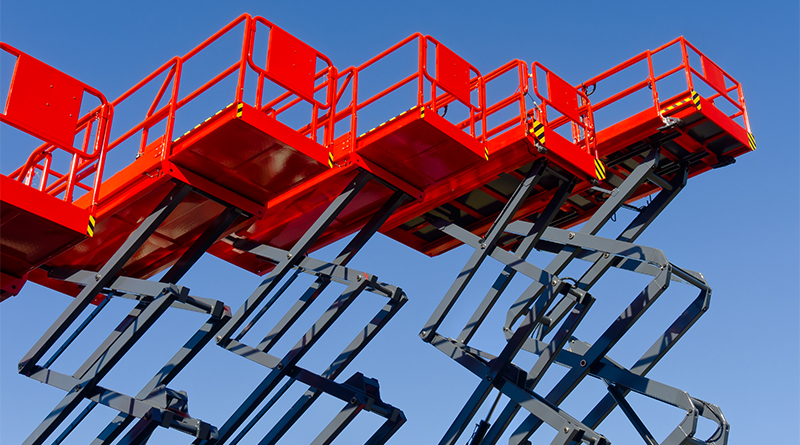
Scissor lifts are one of those machines that look simple until you buy the wrong one. At a glance, they all go straight up and down. In practice, the type of scissor lift, its max working height, platform weight capacity, and operating weight determine whether it fits your jobsite, your building, and your workflow.
This guide starts with the basics — what a scissor lift is and where it’s used — then defines the three core terms buyers should understand first. After that, we’ll walk through the main types of scissor lifts, standard size classes, typical dimensions, and the spec ranges that separate a good pick from a frustrating one.
Want free recent pricing info on sold scissor lifts? Create an account today with Ritchie Bros and receive free pricing info today!
What is a scissor lift?
A scissor lift is an aerial work platform that raises a deck vertically using stacked, criss-crossing metal supports (the “scissor” mechanism). Unlike boom lifts, scissor lifts don’t offer horizontal outreach; their purpose is stable, vertical access with a relatively large platform.
Because the platform is supported directly from underneath, scissor lifts typically provide:
- a more stable “work surface” at height
- more deck space for tools/materials
- higher platform capacities (for their height class) than booms
Think of a scissor lift as a mobile elevated floor — built for repeated up/down work with minimal repositioning.
Common applications for scissor lifts
Scissor lifts show up anywhere people need safe, repeatable vertical access.
Indoor slab applications:
- warehouses and logistics (inventory access, racking installs)
- manufacturing plants (maintenance and overhead equipment)
- retail and commercial buildouts (lighting grids, HVAC, sprinkler lines)
- schools, arenas, airports (facility maintenance cycles)
Indoor jobs usually favor electric slab scissor lifts because they’re quiet, compact, and emission-free.
Outdoor flat-surface applications:
- exterior building maintenance
- signage and lighting installs
- roofline and façade work on pavement or compacted base
Outdoor rough-terrain applications:
- civil and infrastructure sites
- steel erection support
- uneven ground or mild slopes
- muddy or soft substrate where slab lifts can’t travel
Your jobsite conditions are usually what decide the lift type before height does.
The three scissor-lift specs buyers should understand first
Before comparing models, you need a shared vocabulary. These three terms show up on every spec sheet and drive most buying mistakes if they aren’t understood.
Platform weight capacity (platform capacity)
Platform capacity is the maximum total load the deck can safely support — including workers, tools, and materials. Scissor lifts often carry higher platform capacities than boom lifts at similar heights because the load is supported vertically.
Typical platform capacities range from about 500–700 lb on small electric slab units up to 1,000–1,200 lb on many diesel and rough-terrain models, depending on class.
Max working height
Working height is the highest point an operator can safely reach from the platform. It’s usually estimated as platform height + about 6 feet (roughly 2 meters of reach).
So a lift with a 20-ft platform height is typically marketed as ~26-ft working height.
Operating weight
Operating weight is the machine’s real weight in working condition (fluids, batteries or fuel, and standard equipment). Buyers care because operating weight affects:
- transport trailer requirements
- indoor slab load limits
- performance on soft ground
- turning stability at height
Typical scissor lifts weigh from about 1,500 lb for small units to 15,000+ lb for large RT models.
Now that those terms are clear, we can look at how scissor lifts are divided into types and size classes.
Types of scissor lifts (and what each is best for)
The market usually groups scissor lifts by power source and terrain capability. Your “types of scissor lifts / scissor lift types / hydraulic scissor lift / vehicle scissor lift” intent lives here.
Electric slab scissor lifts
Best for: smooth, level indoor floors and paved exterior work.
These are the most common scissor lifts in warehouses and commercial interiors because they’re quiet, narrow, and emission-free.
Expect working heights up to roughly the 40-ft class in mainstream fleets.
Diesel scissor lifts
Best for: outdoor work on firm ground, heavier deck loads, and bigger crews.
Diesel lifts usually have larger platforms and more lift capacity than slab electrics, and don’t have runtime constraints tied to battery cycles.
Rough-terrain (RT) scissor lifts
Best for: uneven terrain, slopes, mud, and high outdoor reach.
RT lifts typically include 4WD, aggressive tires, higher ground clearance, and integrated leveling systems or outriggers.
This category also includes the tallest models on the market — some RT scissors reach ~60-ft platform height (~66-ft working height) with ~1,200-lb capacity.
Hydraulic scissor lifts
“Hydraulic scissor lift” is less a separate category and more the mechanism most scissor lifts use. Electric, diesel, and RT scissors are typically hydraulic-actuated. What matters to buyers is that hydraulic systems govern lifting smoothness, holding power under load, and long-term service costs.
Vehicle / mobile scissor lifts
These are specialty units mounted to trucks or trailers, often used for mobile maintenance, municipal operations, or work that requires road-ready transport plus vertical access. They’re less common than slab/RT categories but show up in fleet comparisons.
Type vs spec range chart
| Type | Typical working height | Platform capacity | Typical stowed width | Operating weight band | Best use |
| Electric slab | 19–40 ft | 500–700 lb | 32–36 in | ~1,500–6,000 lb | Indoor slab, paved exteriors |
| Diesel | 26–50 ft | 800–1,250 lb | 48–72 in | ~6,000–12,000 lb | Outdoor firm ground |
| Rough terrain | 33–66+ ft | 1,000–1,200 lb | 60–92 in | ~6,500–22,000 lb | Slopes/soft ground/high reach |
| Vehicle/mobile | 15–40 ft (varies) | 500–1,000 lb | application-specific | application-specific | Road-mobile maintenance |
Scissor lift sizes and standard height classes
Scissor lift sizes are typically discussed by working height class. Most fleets buy and sell within standard buckets because they align with common jobsite needs.
Remember:
- Platform height = deck height
- Working height = platform height + ~6 ft reach
Scissor lift size chart (common classes)
| Working height class | Platform height | Typical jobs | Common widths |
| 19 ft | ~13 ft | retail ceilings, light maintenance | ~32 |
| 26 ft | ~20 ft | warehouses, MEP installs | ~32 |
| 32 ft | ~26 ft | commercial interiors, mezzanines | ~32–40 |
| 40 ft | ~34 ft | industrial maintenance, exteriors | ~40–48 |
| 50 ft | ~44 ft | outdoor builds, larger slabs/RT crossover | ~48–72 |
| 60–66+ ft (largest) | ~54–60 ft | high RT jobsites, façades | ~66–92 |
Scissor lift dimensions (what changes as lifts get taller)
“Scissor lift dimensions” isn’t just a spec lookup — it’s a buying constraint. As lifts grow taller, you don’t just gain height. You gain width, weight, platform size, and often a different drivetrain.
Stowed width:
- 19–32 ft slab electrics usually stay around 32–36 inches wide.
- 40–50 ft classes expand to ~40–72 inches depending on slab vs diesel.
- RT lifts in the top height classes can exceed 90 inches wide.
Width affects door access, aisle use, and trailer legalities.
Platform size and deck extension
Most scissor lifts have sliding deck extensions. If you’re working along racking or a façade, extension length often matters more than a few extra feet of height because it reduces repositioning.
Operating weight
Weight climbs quickly with height and terrain capability:
- smaller slab electrics: a few thousand pounds
- mid-height diesel/RT: 6,000–12,000 lb
- tallest RT units: up to 15,000–22,000 lb
If you’re indoors, weight becomes a floor-loading issue. Outdoors, it becomes a flotation and recovery issue.
How to choose the right scissor lift in 5 questions
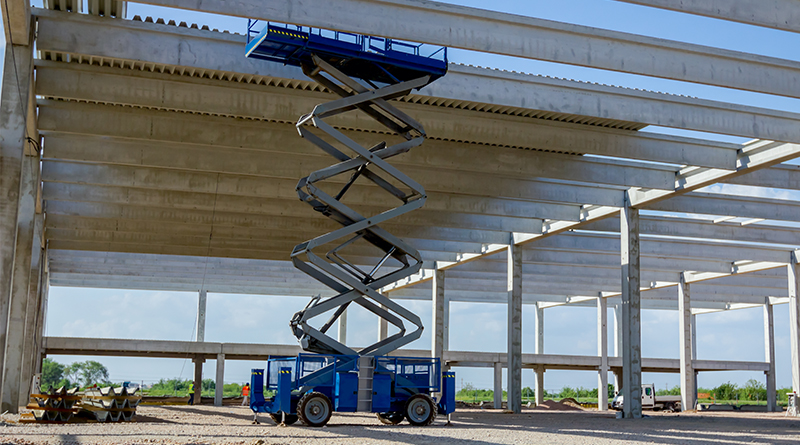
- Indoor or outdoor?
Indoor slab = electric. Outdoor firm base = diesel. Outdoor rough base = RT. - What working height do you actually need?
Pick the smallest class that reaches your highest task. Oversizing adds width, weight, and cost without improving productivity. - What surface are you driving on?
Flat slab, compacted gravel, or soft mud will decide the drivetrain and tire package. - How much weight is going on the platform?
Count operators + tools + materials. Capacity margins matter when you’re working at full height. - Do you have access constraints?
Door width, aisle width, elevator limits, or slab weight ratings often eliminate half the models before height does.
Bottom line
A scissor lift is a vertical work platform built for stable access and deck space. The right one isn’t chosen by height alone. Buyers get the best outcomes when they start with jobsite environment, lock in the correct working height class, then validate the choice through platform weight capacity, stowed dimensions, and operating weight.
If you use that order — environment → height class → capacity/dimensions/weight — you’ll end up with a lift that fits the site and keeps crews productive, not a machine that works in theory but fights you in practice.


 |
Motivated buyers need your equipment – sell in Edmonton’s next auction |

Ritchie Bros. is a one-stop-shop for everything your equipment and truck business needs to succeed - buying and selling solutions, market insights and valuation, global buyer demand, and fleet management tools.
Ritchie Bros., Two Westbrook Corporate Center, Suite #1000 Westchester, Illinois, 60154 | +1.800.663.8457