
Rouse’s Eddie Aldrich checks the pulse of the equipment market at CONEXPO
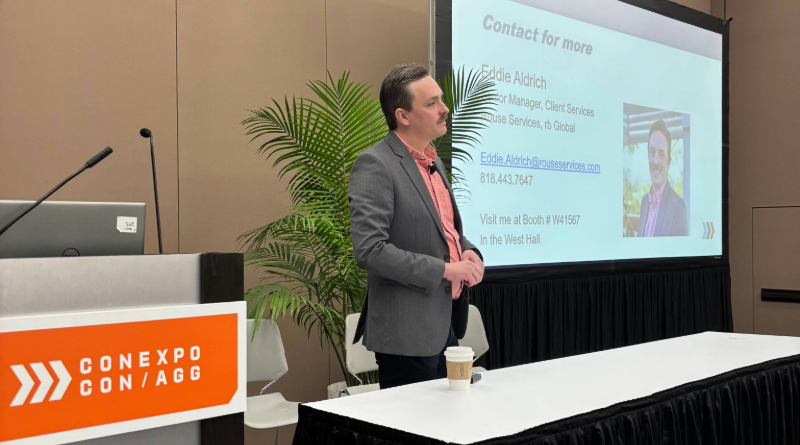
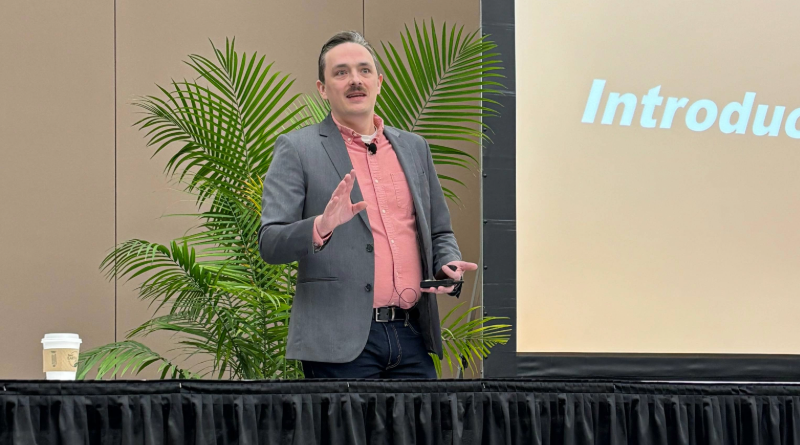
Eddie Aldrich, Senior Manager of Client Service at Rouse, delivered a masterclass in equipment data on the first day at CONEXPO 2026. His presentation, called “Pulse Check on the Equipment Market,” provided deep equipment market insight derived from actual invoice data, analyzing approximately $50 billion in annual transactions to track equipment costs and used market trends.
Aldrich touched on a range of topics, from the pandemic-induced supply chain freezes to the subsequent “bull run” on used iron. He says the market has been anything but predictable, then provided a “Pulse Check” on where the industry stands today.
Here are 4 key takeaways for rental houses, dealers, and fleet managers as we look toward 2026.
1. The cost of doing business is rising
- 2011–2021: Used equipment prices rose a total of 22%.
- 2021–2024: Prices skyrocketed by 35% (roughly 12% annually).
While 2025 saw some flattening, the “recovery rate” (how much your used sale covers the cost of a new replacement) remains the metric to watch. Even if you’re selling a machine for more dollars today than in 2019, the rising cost of new iron means your purchasing power may actually be lower.
2. The great “de-fleeting” of 2024–2025
Utilization was an important theme during Eddie’s presentation. In 2024, the industry saw more equipment on rent than ever before, yet physical utilization was at its lowest point since 2020.
How is that possible? During the supply shortages of 2021 and 2022, companies grabbed every piece of fleet they could find. When the supply chain finally opened in 2023, many found themselves “over-fleeted.”
As a result, 2024 and 2025 have been defined by de-fleeting. Rental houses are aggressively selling off underutilized assets to right-size their balance sheets. For 2026, the American Rental Association (ARA) predicts slow but steady revenue growth of 2.3%, with a primary focus on tightening utilization rather than just raising rates.
3. Is the auction market leading a retail recovery?
If you want to know where retail prices are going, look at auctions as a potential guide. Historically, auction trends lead retail trends by 3 to 9 months.
“Retail market is looking really healthy right now. Stability is what we are seeing across major categories,” said Aldrich.
While auction values dipped significantly from their post-COVID peaks, they began to tick upward in early 2025. If the historical 3–9 month lag holds true, the retail market is poised for a period of encouraging growth and continued stability.
4. The death of regional pricing?
In the past, you could arbitrage equipment by moving it across the country to capture regional price gaps. Today, those gaps are flattening. Aldrich attributes this to two main factors:
- Forced Digitalization: COVID-19 forced buyers to look beyond their backyards. Ritchie Bros. reports that 40% of their buyers are now international, while Bidadoo sees 80% of sales go out-of-state.
- Freight is No Longer a Blocker: Specialized trucking costs have fallen significantly since their 2022 peak. When freight is affordable and data is transparent, a buyer is less likely to be restricted by their region and location.
Final thoughts
While the market is “nervous” due to policy uncertainty and potential tariffs, the underlying data suggests a “healthy stability.” For those in the business of retail, the signs are encouraging. The “wild west” volatility of the early 2020s is fading, replaced by a sophisticated, digitally-driven market where utilization is king.
Looking for more industry expertise on the current equipment market? Get in touch today for a no-obligation chat.


 |
Maximizing Returns: How equipment dealers are using auctions more intentionally |

Ritchie Bros. is a one-stop-shop for everything your equipment and truck business needs to succeed - buying and selling solutions, market insights and valuation, global buyer demand, and fleet management tools.
Ritchie Bros., Two Westbrook Corporate Center, Suite #1000 Westchester, Illinois, 60154 | +1.800.663.8457